Faith & Religion
Canada's Top Court Upholds Quebec's Religious Symbols Ban for Teachers and Police, With One Exception
A fractured Supreme Court of Canada ruled Friday that Quebec validly shielded Bill 21 with the notwithstanding clause. For believers it is a hard day; for provinces that used the same clause to protect parents, it is a reprieve.
By MARGARET CALLAHANStaff Correspondent · WASHINGTON · Nov 27, 11:31 AM · 4 min. read
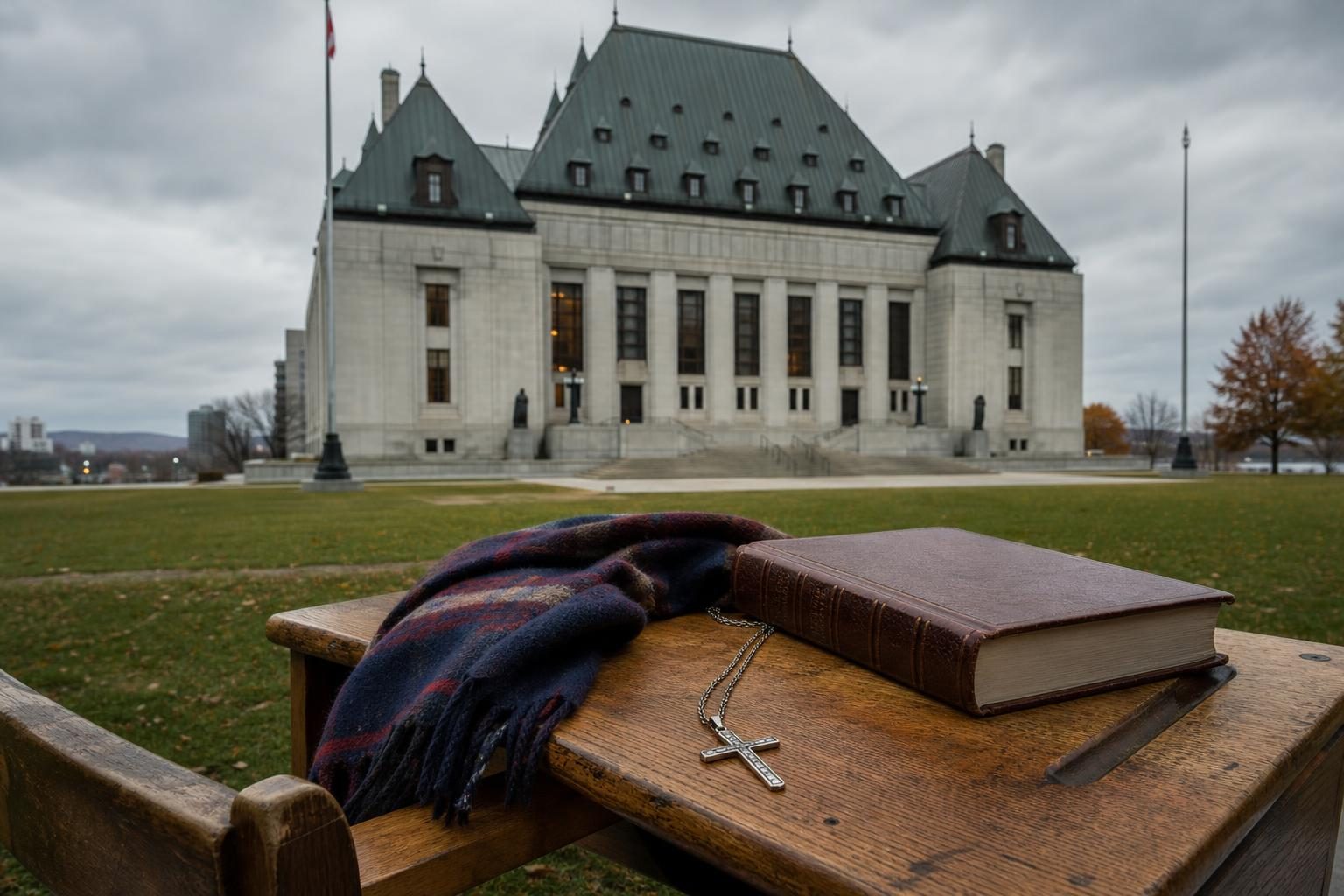
Illustration · Liberty Bell Report
The Supreme Court of Canada on Friday largely upheld Quebec's secularism law, Bill 21, which bars some public sector workers from wearing religious symbols on the job, CBC News reported. The court struck down only one piece: the part that applies to members of Quebec's provincial legislature.
Six justices upheld the law on the ground that Quebec validly invoked the Charter's notwithstanding clause when it passed Bill 21 in 2019, The Globe and Mail reported. But the seven judges who heard the case split into four camps and agreed only on that central question, the Globe said, and the court did not issue its own declaration on whether the law violates the Charter.
For Christians, Jews, Muslims and Sikhs in Quebec whose faith shapes what they wear, it is a hard day. For provinces that have used the same constitutional tool to protect parents, the ruling is a reprieve. Both things are true, and both matter.
What the Court Decided
Bill 21 bars public employees in positions of authority, including teachers, police officers, prison guards and judges, from wearing religious symbols while at work, CBC News reported when Quebec's Court of Appeal upheld the law in 2024. That means a teacher's cross, a police officer's turban, a judge's kippah and a teacher's head scarf all fall under the ban.
Because Quebec shielded the law with the notwithstanding clause, challengers could not use the Charter's equality guarantee in Section 15 to attack it, according to CBC's coverage of the ruling. The clause lets a legislature keep a law in force even if it would otherwise conflict with certain Charter rights, including freedom of religion and equality.
The one exception involves elected lawmakers. The court found that the law infringes democratic rights under Section 3 of the Charter by barring members of Quebec's National Assembly from wearing a face covering for religious reasons. Section 3 is not among the rights the notwithstanding clause can override, which is why that finding stands.
The court also rejected the argument by English-language school boards that the law violates minority-language education rights, finding it had not been shown that the restrictions undermine the English-speaking minority's linguistic or cultural interests, according to CBC. That leaves the ban in force in English schools, as the Court of Appeal had ruled.
The Case and the Challengers
The challenge was brought by the Canadian Civil Liberties Association, the National Council of Canadian Muslims and activist Ichrak Nourel Hak, among others. The justices heard four days of arguments in March, one of the longest hearings in the court's history.
The federal government in Ottawa did not challenge Bill 21 itself but asked the justices to put limits on how provinces may use the notwithstanding clause, Global News reported. Quebec Premier Paul St-Pierre Plamondon defended the clause as an essential democratic tool and warned that a ruling curbing legislatures would draw a strong reaction from the provinces. With the court united only on the central question, Friday's ruling does not appear to hand Ottawa the clear new limits it sought.
Why Believers Should Care
Religious liberty is not a privilege a government hands out; it is a right that comes from God and that free societies are bound to respect. A teacher who wears a small cross is not imposing her faith on anyone. She is simply refusing to pretend she has none. Laws that tell believers to leave every visible sign of faith at the schoolhouse door teach children that faith is something to hide.
Americans have a different tradition. The First Amendment protects the free exercise of religion, and no legislature here can wave that guarantee away with a single clause. Friday's ruling is a reminder of how much that protection is worth.
The Other Side of the Ledger
Yet conservatives should read the decision carefully before condemning all of it. Saskatchewan invoked the same clause to protect its Parents' Bill of Rights, which bars children under 16 from changing their names or pronouns at school without a parent's consent, and the Supreme Court of Canada has agreed to hear appeals in the challenge to that law, Global News reported. A decision gutting the clause would have handed judges, not voters, the final word on laws like that one, too.
That is the tension at the heart of this case. The same clause that lets Quebec push faith out of its classrooms also lets elected legislatures stand up for parents when courts will not. The answer is not to strip voters of that power. It is to persuade them, in Quebec and everywhere, to use it to protect conscience rather than restrict it.
What Comes Next
Bill 21 stays in force for Quebec's teachers, police officers and judges, while the ban on face coverings for members of the National Assembly falls. Expect the debate to move from the courtroom to the ballot box, where Quebec voters, and the provincial leaders watching from Saskatchewan and beyond, will decide how the clause is used next.
Sources
- CBC News: Supreme Court of Canada upholds Quebec's controversial secularism law, with 1 exception (link)
- The Globe and Mail: Bill 21 live updates: Supreme Court upholds Quebec secularism law in landmark ruling (link)
- CBC News: Appeal Court upholds Quebec law that bars teachers, police from wearing religious symbols (link)
- Canadian Civil Liberties Association: Bill 21 (link)
- Global News: Quebec's secularism law under scanner as Supreme Court to rule on Bill 21 (link)
- Global News: Supreme Court of Canada to hear Saskatchewan school pronoun law appeals (link)
— 30 —