
Faith & Religion
Advent Begins Sunday: Four Weeks to Make Room for Christ Before Christmas
The church's new year starts Nov. 29 with the first violet candle. Here is where the season came from, what it asks of us, and simple ways families can keep it at home.
By ETHAN CALLOWAYStaff Correspondent · WASHINGTON · Nov 27, 9:30 AM · 3 min. read
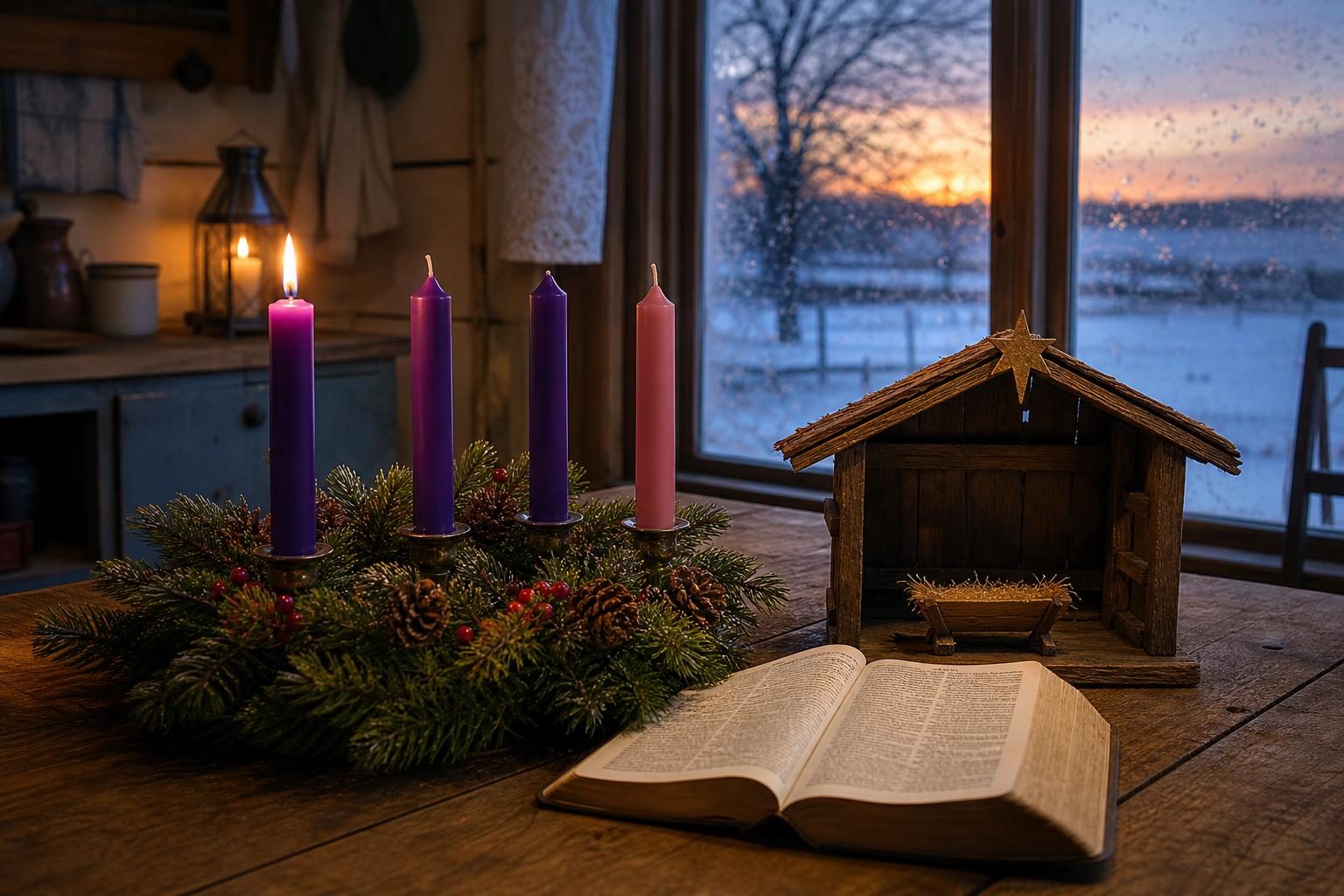
Illustration · Liberty Bell Report
The stores have been playing Christmas music for weeks. Black Friday sales, which once lasted a day, now stretch across much of November, as Axios noted this morning. But for Christians, the season of waiting has not even started yet. It begins this Sunday.
Sunday, Nov. 29, is the First Sunday of Advent, the start of a four-week season of preparation for Christmas and the first day of the church's new year. Here is a short guide to what Advent is, where it came from and how families can keep it.
What Advent Is
The word comes from the Latin for "coming." The U.S. Conference of Catholic Bishops describes the season as a time of preparation for two comings of Christ: remembering His birth in Bethlehem and looking ahead to His return at the end of time. The Sunday readings move through the prophets' promises of a Messiah, John the Baptist's call to repent and prepare the way of the Lord, and the angel's message to Mary.
The calendar follows a simple rule. Advent begins on the Sunday that falls on or closest to Nov. 30, the feast of St. Andrew the Apostle, and it ends before the evening prayer of Christmas Eve. This year that means four Sundays: Nov. 29, Dec. 6, Dec. 13 and Dec. 20, with the season closing on Thursday, Dec. 24. In Catholic parishes, the first Sunday also turns the page on the three-year cycle of Sunday readings, from Year A to Year B.
Where It Came From
Christians have marked a season of preparation before Christmas for well over a thousand years. Historians place its roots in Western Europe in roughly the fourth to sixth centuries, and by the ninth century the church had settled on the first Sunday of Advent as the beginning of the liturgical year, according to Catholic Answers and Crosswalk.
The most familiar symbol is younger. The Advent wreath first appeared in Germany in 1839, when a Lutheran minister running a mission for poor children fastened candles to an old cart wheel to help the children count down the days to Christmas, according to accounts of the tradition. The custom spread from there into Catholic and Protestant homes alike. Today's wreath usually holds four candles, one for each week. Three are violet, the color of preparation and repentance, and one is rose, lit on the third Sunday, Gaudete Sunday, when the church pauses to rejoice that Christmas is near. This year the rose candle will be lit on Dec. 13.
Why It Is Worth Keeping
Advent can feel out of step with the culture, and that is the point. The world says the celebration should start the day after Thanksgiving and be over by Dec. 26. The church says wait, and then celebrate Christmas for its full season. Waiting is not a burden here. It is how hearts are made ready. The prophet Isaiah promised that the people who walked in darkness would see a great light, and Advent is the slow, quiet work of looking for that light.
For families with young children, Advent can also be a gift against the noise. It gives parents a reason to slow down, to turn off the screen for a few minutes each evening and to tell the story of Christmas in pieces, one week at a time.
Simple Ways to Keep Advent at Home
None of this requires a theology degree or a big budget. A few ideas that families of many traditions have found helpful:
Set up a wreath on the dinner table and light the week's candle before a meal, with a short prayer and a Bible reading. The USCCB publishes a free Advent calendar with a daily suggestion for prayer and service.
Read the Christmas story slowly. Start with the prophets in the first week, John the Baptist in the second, and Mary and Joseph as Christmas draws near.
Pick one act of service as a family each week: a meal for a neighbor, a gift for a child in need, a visit to someone who will spend the holidays alone.
Save something for Christmas itself. Some families wait to put the figure of the Christ Child in the manger, or to sing certain carols, until Christmas Eve, so that the day feels like an arrival rather than an ending.
The shopping season will take care of itself. Advent asks something harder and better: to make room in our homes and hearts for the One who is coming.
Sources
- U.S. Conference of Catholic Bishops: What is Advent? (link)
- U.S. Conference of Catholic Bishops: Advent Calendar 2026 (link)
- Catholic Answers: Catholic Answers Guide to Advent (link)
- Hallow: The Schedule of Advent: When Does Advent Start? (link)
- Crosswalk: What Is Advent? (link)
- Axios: Black Friday's frenzy gives way to "Black November" (link)
— 30 —