Native America
The First Bible Printed in America Spoke Wampanoag. Three Centuries Later, It Helped the Language Speak Again
Printed in 1663 with the help of Native translators and typesetters, the Eliot Bible became the key to a tribal language revival that now reaches a children's classroom.
By JOE REDHAWKStaff Correspondent · NEW YORK · Nov 26, 3:30 PM · 3 min. read
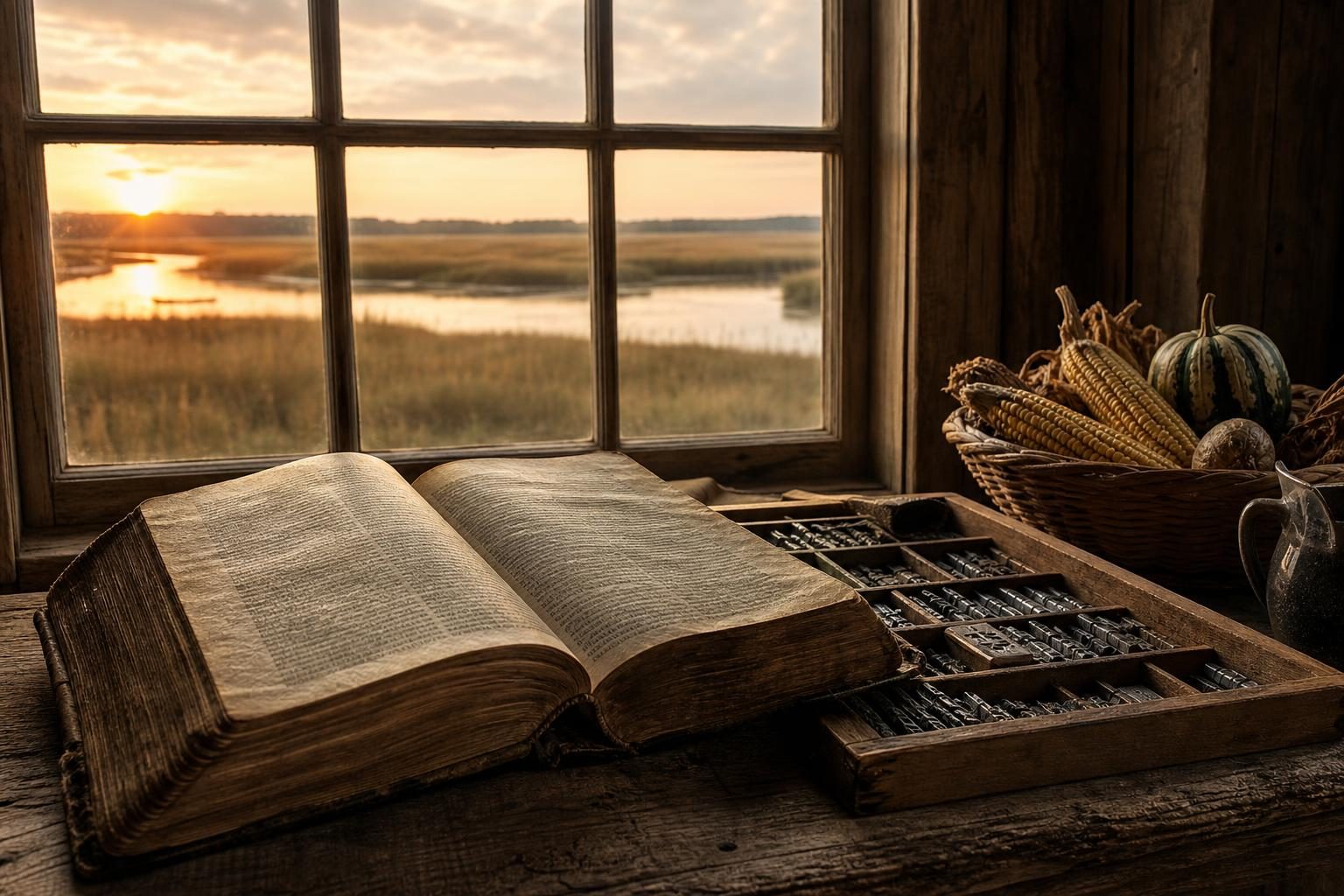
Illustration · Liberty Bell Report
On a holiday that brings the Wampanoag people to mind in nearly every American home, it is worth remembering another first that belongs to them. The first Bible ever published by English colonists in America was not printed in English at all. It was printed in Wampanoag, a Native language of what is now Massachusetts, as The Washington Post recounted on Thanksgiving Day.
The book appeared in 1663 under the title Mamusse Wunneetupanatamwe Up-Biblum God, the work of Puritan minister John Eliot, and it was printed in Cambridge, Massachusetts, by Samuel Green and Marmaduke Johnson, according to the Morgan Library & Museum in New York, which holds a copy. It was the first translation of the Christian Bible into an Indigenous language of the Americas and the first Bible published anywhere in British North America.
A Mission Born After War
The story behind the book is not a simple one, and it deserves to be told honestly. In the aftermath of war in New England, some Puritan clergymen looked for new ways to bring the Gospel to Native Americans, and they settled on putting Scripture into Native hands in Native words, The Washington Post reported. The Morgan notes that Eliot's translation was tied to his wider effort to convert Native peoples to Christianity and to draw them away from their traditional ways of life.
Christians today can admire Eliot's zeal to share the Word of God while also admitting that the colonial project around him often treated Native communities harshly. Both things are true, and the Wampanoag people have every right to remember both.
The Native Hands Behind the Pages
What is too often forgotten is that the Bible was not the work of one Englishman alone. Native men made it possible. A syndicated account published by The Washington Times describes how Eliot relied on Cockenoe, a Montauk man from Long Island who had been taken captive during the Pequot War of 1637, to pronounce the words of the language so that Eliot could write them down. A Nipmuc man named Wawaus, from what is now central Massachusetts, helped set the type for the book, according to the same account.
Those men did painstaking work. Every page had to be translated, written out in letters and set by hand, one piece of metal type at a time, on a colonial press. Their names belong in the story as surely as Eliot's.
The Book That Kept a Language Alive
The deepest surprise in this story came three centuries later. Over time the Wampanoag language fell silent, and for generations no one spoke it at all. Then, in 1993, Jessie Little Doe Baird, a Mashpee Wampanoag linguist, helped found the Wôpanâak Language Reclamation Project, an intertribal effort that brings together citizens of the Mashpee, Aquinnah, Assonet and Herring Pond Wampanoag communities to return fluency to their nation.
The project says plainly that the existence of the Eliot Bible, along with other documents written in the language, is what made reclaiming the once-lost language possible. Alongside the Bible, many handwritten deeds, wills and petitions that Wampanoag signers wrote in their own language to the Massachusetts Bay and Plymouth colonies have survived, giving scholars a record of how the language was actually used.
Baird's work drew national attention in 2010, when she received a MacArthur Fellowship for reviving a long-silent language and restoring to her community a vital sense of its heritage, the MacArthur Foundation said.
Children Speaking Again
The fruit of that effort can be heard in a classroom. Mukayuhsak Weekuw, whose name means "the children's house," opened in September 2016 as a language immersion school run by the reclamation project, according to the Mashpee Wampanoag Tribe. The tribe says the school marked the first time in more than four centuries that the language was used to teach tribal children for most of the school day.
There is something remarkable in that. A book printed in 1663 to carry the Gospel to the Wampanoag became, more than 300 years later, the key that helped Wampanoag children speak the words of their ancestors again. Believers will see the hand of Providence in it. The Word that Eliot and his Native helpers printed did more than preach. It preserved.
A Thanksgiving Story Worth Telling
Most Americans learn that the Wampanoag shared the harvest meal with the Pilgrims in 1621. Fewer learn what came after: the war, the losses and the long silence of a language, and then the slow, determined work of a people bringing it back with the help of an old Bible and a stack of colonial-era deeds.
That is a story of faith, family and endurance, the very things this holiday celebrates. As families gather around the table today, the Wampanoag Bible is a reminder that the story of the first Thanksgiving did not end in 1621, and that the people who were there are still here, still speaking and still giving the country reasons to be grateful.
Sources
- The Washington Post: First Bible published by American colonists was in Wampanoag, a Native language (link)
- The Washington Times: New England's first Bible, published in an Indigenous language, aimed to convert Native Americans (link)
- The Morgan Library & Museum: A 1663 Bible in the Wampanoag (Massachusett) Language (link)
- Wôpanâak Language Reclamation Project: Project History (link)
- MacArthur Foundation: Jessie Little Doe Baird, Class of 2010 (link)
- Mashpee Wampanoag Tribe: Mukayuhsak Weekuw: The Children's House (link)
— 30 —