 Overnight on World Watch with Grace Whitfield
Costa Rica Turns Away the UN's Albanese at the Airport
A day before a university planned to honor her, Costa Rica's immigration chief cited an international alert and refused entry to the UN's Palestinian-territories rapporteur, whom Washington sanctioned last year.
Filed November 27, 2026 · 📍 Washington, DC 20001
Were you there? Share your story
Key points
- Costa Rica refused entry to UN rapporteur Francesca Albanese at San José's airport on Thursday, citing national security.
- The immigration chief said she is the subject of an international alert over terrorism links; the government has not said who issued it.
- The University of Costa Rica, which planned to give her an honorary doctorate Friday, demanded an explanation, and left-wing lawmakers went to court.
- The U.S. sanctioned Albanese in July 2025 over her push for ICC action against American and Israeli officials.
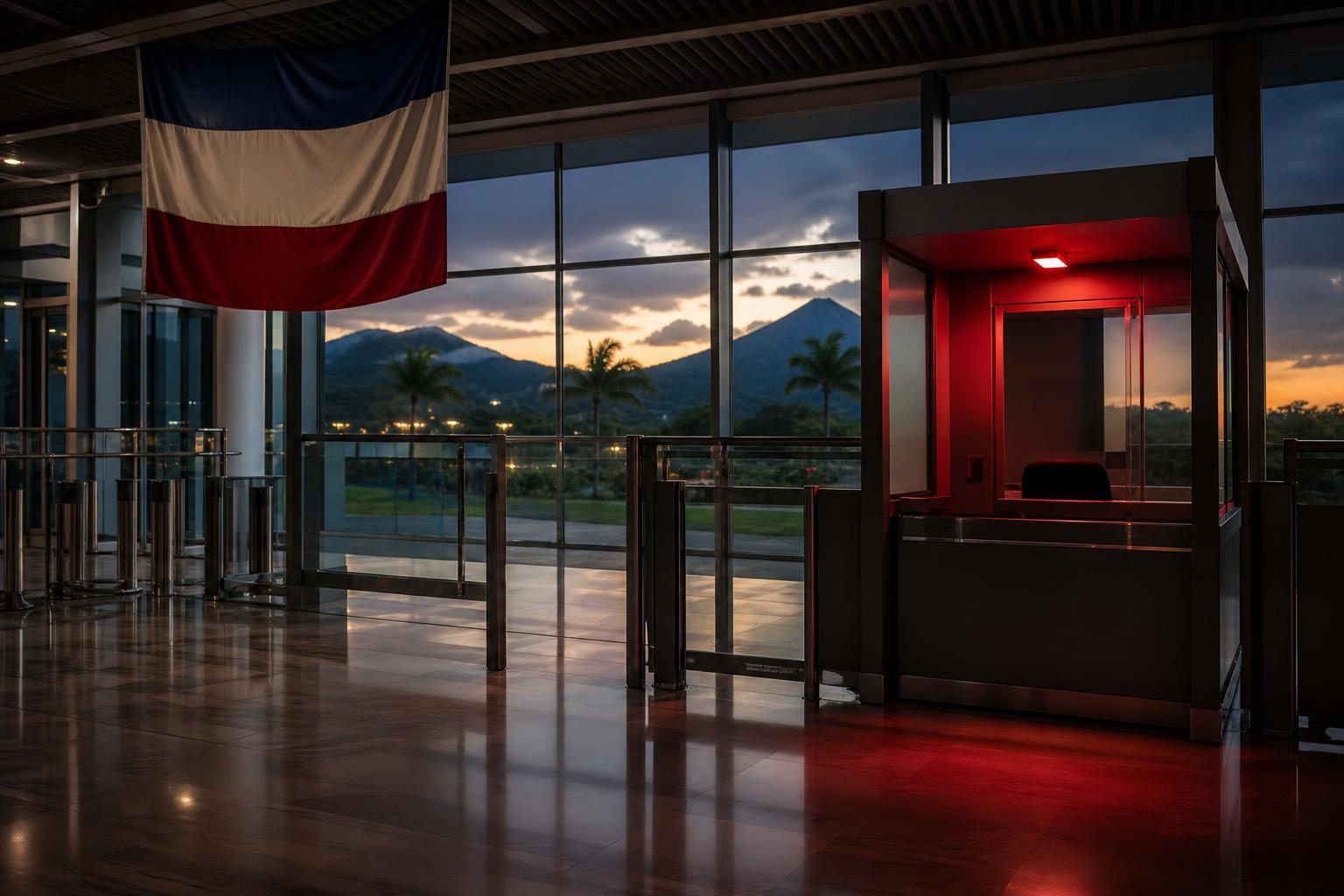
Costa Rica refused to let Francesca Albanese, the United Nations special rapporteur for the Palestinian territories, into the country on Thursday, turning her away at the airport in San José one day before the University of Costa Rica planned to give her an honorary doctorate, Arab News reported [1].
Omer Badilla, the director general of Costa Rica's immigration service, explained the decision in a video posted to social media. Albanese, he said, "is the subject of an international alert over links to terrorist acts," and he added that the decision should make clear the threat she poses to national security, according to Le Monde [2]. In a later interview with local media, Badilla said the refusal rested on national security grounds that he did not spell out, and that Albanese was not detained, only refused entry [1].
The government has not made public which alert it relied on or who issued it. The Spanish news agency EFE reported that officials had not answered its questions on the matter [3]. That matters: for now, the terrorism link is the government's stated reason, not the finding of any court.
A University's Honor, a Government's No
The honorary degree had been set for Friday [1]. The University of Costa Rica's rector's office said immigration officers were blocking Albanese's entry and asked the government to explain itself, and the university's governing council later called the refusal a matter of enormous gravity that demands a clear, public explanation, EFE reported [3]. The San José daily La Nación described Albanese as held at the airport while the standoff played out, though Badilla insisted she was never detained [1][4].
Albanese answered from the airport on social media, casting the episode as a picture of how power reacts when criticism touches a nerve [1]. Lawmakers from the left-wing Frente Amplio party filed a habeas corpus petition with the country's Constitutional Chamber in an effort to get her admitted, according to EFE [3].
Israel's ambassador to the United Nations, Danny Danon, welcomed the decision, saying that people who exploit a UN mandate to spread propaganda should face consequences [1][2].
Already Barred From the United States
Costa Rica is not the first government to close its door to Albanese. On July 9, 2025, Secretary of State Marco Rubio placed sanctions on her under President Trump's executive order aimed at those who help the International Criminal Court pursue Americans and Israelis [5]. Rubio cited what he called her "illegitimate and shameful efforts" to prompt ICC action against U.S. and Israeli officials, companies and executives [5]. The sanctions bar her from entering the United States and freeze any assets she or her family hold here [5][6].
At the time, Albanese had accused more than 60 companies, among them weapons makers and technology firms, of helping sustain Israeli settlements and the war in Gaza, Al Jazeera reported [6]. The UN's human rights chief, Volker Türk, urged Washington to reverse the sanctions [6]. Albanese has also drawn repeated criticism from Israel for accusing it of genocide and other war crimes in Gaza and the West Bank [1].
Her quarrel with San José did not start this week. Last December, Albanese criticized the free trade agreement Costa Rica signed with Israel and called for its ratification to be put on hold [1].
What It Means
There is a principle here bigger than one rapporteur. Every sovereign nation decides who crosses its border, and a UN title is not a pass around that decision. The United States reached its own judgment about Albanese last year [5]. On Thursday, a small Central American democracy that signed a free trade agreement with Israel reached a similar one [1].
That principle carries a duty with it. If the government is right that Albanese is the subject of an international terrorism alert, it should say who issued the alert and what it says. The university, the lawmakers who went to court and the Costa Rican public are all asking the same question [3]. A firm border policy is strongest when it rests on evidence the public can see, and Costa Rica's friends should want it to make that case plainly.
What to watch next: whether the Constitutional Chamber acts on the habeas corpus petition, whether the government releases the alert it cited, and whether the university's Friday ceremony goes ahead without her [3].
Sources
- [1]Opens in a new tab ↗
- [2]Opens in a new tab ↗
- [3]Infobae (EFE)Costa Rica le niega la entrada a Albanese, relatora de la ONU en territorios palestinosOpens in a new tab ↗
- [4]Opens in a new tab ↗
- [5]The Daily SignalRubio Hits UN Human Rights Council Rapporteur With SanctionsOpens in a new tab ↗
- [6]Opens in a new tab ↗
Israel's new parliament is sworn in. Who would you rather see lead Israel?
- Benjamin Netanyahu
- Gadi Eisenkot
- Someone new
- That's for Israelis to decide
More in World News
Houthi Strike Kills a Worker and Halts Units at Saudi Arabia's Jazan Refinery
Yesterday on The Power Grid with Priya Desai
Trump: I Told Putin to Pull Back Across Europe
Yesterday on The Briefing Room with Claire Donovan
Every Hostage Walks Out: Colombian Forces Storm Cartagena Supermarket, Ending Overnight Siege
Yesterday on World Watch with Grace Whitfield
Were you there?
If you were at the scene, or this story touched your life, tell us what you saw and what it was like.
Discussion 0
Sign in or create a free account to join the discussion.
No comments yet. Start the discussion.