
 On Nov 19 on Hollister Tonight with Jack Hollister
Army to Blow Up Five Tons of Unstable Explosive in Iowa
Neighbors of the Iowa Army Ammunition Plant are asked to clear out Friday as the Army destroys degraded lead azide it says is too dangerous to move.
Filed November 19, 2026 · 📍 Chicago, IL 60602
Were you there? Share your story
Story tracker
- Jack Hollister
Status as of about 1:45 p.m. Eastern on Wednesday: The Army carried out the detonation this morning, destroying the nation's entire lead azide stockpile at the Middletown plant, PBS News reported [1]. Gov. Kim Reynolds said initial feedback from state experts and federal partners shows it was successful, while Gov.-elect Rob Sand thanked the experts but called the lead-up "chaotic and unclear" and asked for immediate transparency, CBS News reported [2]. President Trump wrote on Truth Social that the Army's mitigation efforts had "far exceeded expectations," Deutsche Welle reported [3]. Federal officials said early air monitoring found zero airborne lead, according to ABC News [4].
What to watch: soil and water test results for Middletown, Burlington and the surrounding area, and the incoming governor's push for answers on how the stockpile reached this point.
- Jack Hollister
Status as of about 9:30 a.m. Eastern on Wednesday: detonation day has arrived in Middletown. The Army planned to destroy the degraded lead azide at the Iowa Army Ammunition Plant this morning, MS NOW reported, after the federal appeals court declined to stop it [5][1][2]. U.S. officials say the 68 drums are at risk of exploding on their own, and local residents were urged to evacuate over concerns about lead contamination, France 24 reported; PBS reported the Army recommended that Middletown residents begin leaving on Tuesday [3][4]. As of this update, no official word had been released on whether the blast had taken place.
What to watch: confirmation that the detonation was carried out safely, air and soil readings from state health officials, and when Middletown families can go home.
ABC News · CNBC · France 24 · PBS NewsHour · MS NOW
- Jack Hollister
A three-judge panel of the 8th U.S. Circuit Court of Appeals on Monday lifted its temporary block and declined to stop the Army from detonating the lead azide, ruling that the EPA's emergency permit has enough safeguards to keep lead dust from spreading [1][2]. That meets the first of the two conditions President Trump set earlier in the day. Acting Army Secretary Adam Telle said the detonation will go forward Wednesday morning, as scheduled, depending on wind forecasts [3]. Gov.-elect Rob Sand has said the administration should make the final call and urged the White House to explain its reasoning to Iowans [2].
- Jack Hollister
President Trump on Monday ordered the Army not to carry out the planned Thanksgiving-eve detonation of lead azide at the Iowa Army Ammunition Plant unless the federal appeals court and Iowa Gov.-elect Rob Sand both approve it. Trump said he supports the Army's plan but warned he would hold Sand responsible for any harm if the incoming governor blocks it. Full story: "TRUMP HALTS IOWA BLAST, PUTS ROB SAND ON THE HOOK."
- Follow-up storyTRUMP HALTS IOWA BLAST, PUTS ROB SAND ON THE HOOK
- Dan Whitaker
The Army has moved the planned controlled detonation of nearly 10,000 pounds of degraded lead azide at the Iowa Army Ammunition Plant in Middletown to Wednesday, ABC News reported Sunday night [1]. CNN also reported the Army now intends to carry out the blast Wednesday, relying on an emergency munitions exclusion even as a federal appeals court's pause on the EPA permit remains in place [2]. The Army has warned that freezing temperatures raise the risk of an accidental explosion if the material is left in place, CBS News reported [3].
- Cole Brennan
The Army now says it will destroy the degraded lead azide at the Iowa Army Ammunition Plant by Tuesday, Nov. 24, even though a federal appeals court has paused the EPA permit it had relied on. In a filing Saturday night, the Justice Department argued the stay covers only that permit, not a separate emergency authority, and said colder weather creates an immediate risk the material could explode on its own. The Iowa Environmental Council and the Sierra Club's Iowa chapter, citing two scientists' affidavits, dispute that an emergency exists and are asking the court to keep the blast on hold.
- Jack Hollister
A federal appeals court has temporarily blocked the Army's plan to blow up the degraded lead azide at the Iowa Army Ammunition Plant. The Eighth Circuit Court of Appeals put an administrative stay on the EPA emergency permit for the detonation while it weighs an emergency request from the Iowa Environmental Council and the Sierra Club, which argue the blast could spread lead dust across a wide area [1][2]. The Army had already pushed the detonation from Friday to Monday after public concern, and it could still go ahead then if the court rules in the Army's favor [1][3].
Key points
- The Army will destroy 68 drums of degraded lead azide, close to five tons, at the Iowa Army Ammunition Plant on Friday.
- People in the affected area are asked to stay away from 8 a.m. to 2 p.m.; those who stay should keep windows and doors shut.
- Modeling shows lead dust could drift across a band up to 20 miles wide toward the Quad Cities.
- The EPA approved an emergency permit Nov. 13, and state leaders say they got only days of notice.
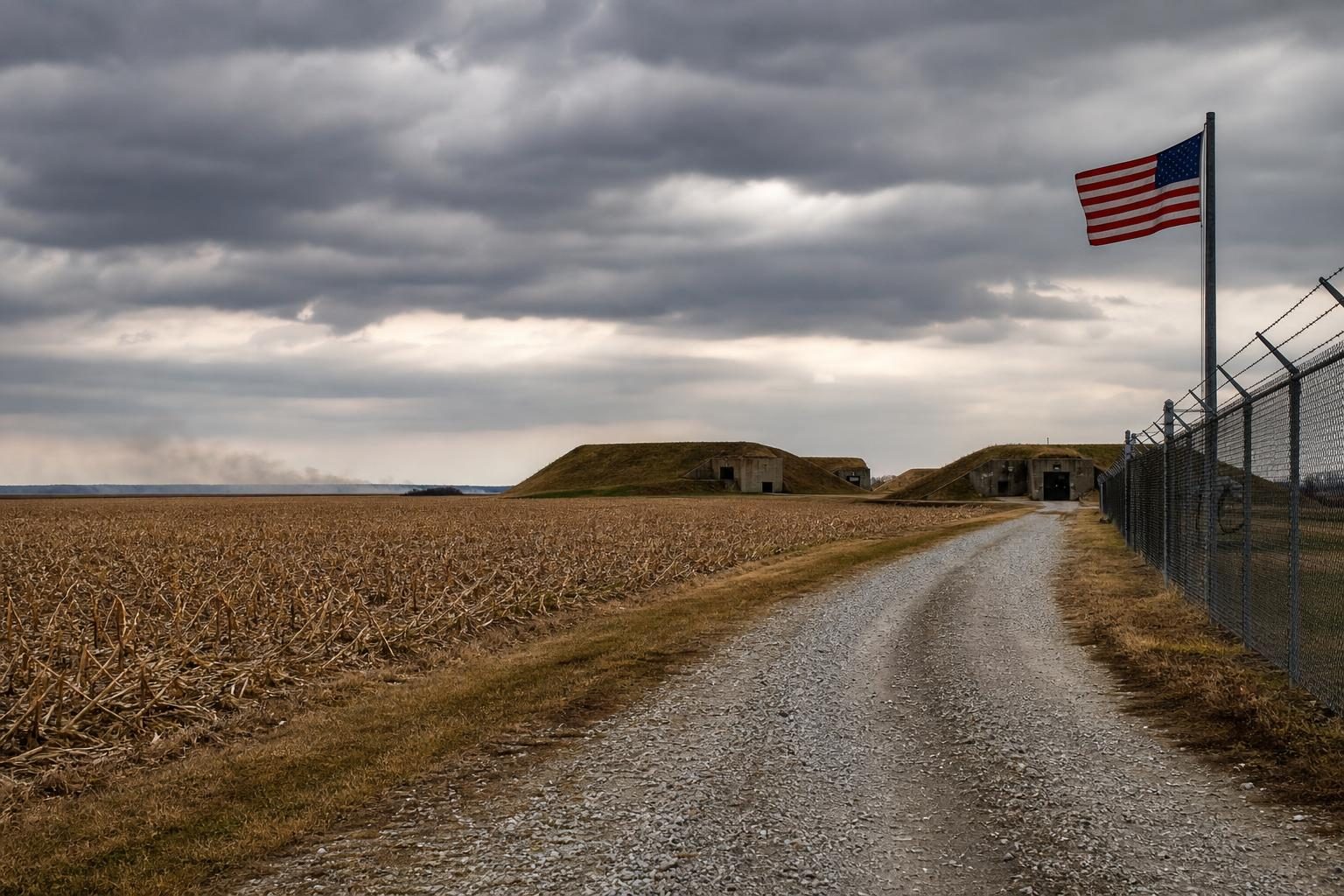
The U.S. Army plans to blow up 68 drums of a degraded explosive called lead azide at the Iowa Army Ammunition Plant near Middletown on Friday, and it has asked some nearby residents to leave their homes while it does, Fox News and NBC News reported [1][2]. The material weighs close to five tons, and officials say it has become too unstable to move [1][5].
Why the Army says it has no choice
Lead azide, which Fox News described as a bomb-making chemical, is used to set off larger explosive charges [2]. During a routine check earlier this year, workers found that water meant to keep the material stable had evaporated, allowing the lead azide to crystallize, CBS Chicago reported [5]. Officials concluded that moving or relocating the drums carried an unacceptable risk of an accidental blast [5].
The problem led the Army's Joint Munitions Command, based in Rock Island, Illinois, to close the plant from March 12 to 30 for what it called a proactive safety review, NPR Illinois reported [4]. The Army then laid out a multi-step plan to neutralize and dispose of the material, keeping it in secure, earth-covered magazines in the meantime [4].
What neighbors are being told
In its public advisory, the Army said it will set off two controlled detonations Friday and asked people in the affected area to stay away from 8 a.m. to 2 p.m. [3]. It warned of noise, ground vibration and a dust plume containing some lead, and said the dust should linger no more than about an hour, depending on wind speed [3]. People who cannot leave are told to stay indoors with windows and doors closed [1].
The Army says most of the lead will settle close to the detonation site [5]. But modeling cited by NPR Illinois shows the possibility of elevated lead particles in the air across a band up to 20 miles wide, stretching from the Burlington area to well north of the Quad Cities [4]. Some schools in the potential path have canceled classes, and residents can sign up to have their soil tested after the blast and file claims for any property damage, CBS Chicago reported [5].
Questions about the notice
The Environmental Protection Agency approved an emergency permit for the detonation on Nov. 13, yet some state and local leaders said they learned of the plan only days ago [5][6]. The governor's office became aware of it Monday, after the Army issued its public advisory, The Washington Sun reported [6].
The families around Middletown have lived beside this plant and supported the country's defense for generations, and they deserve straight answers when the Army asks them to leave their homes. Destroying the drums on site may well be the safest way to handle a dangerous problem. But a few days of notice for a lead-dust plume that could cross into Illinois is a fair thing to question, and so is how the material was allowed to degrade in the first place.
Sources
Is America headed in the right direction?
- Right direction
- Wrong direction
- Mixed
- Too soon to tell after the midterms
More in U.S. News

Cargo Jet Runs Off Miami Runway, Freezing Thanksgiving Eve Arrivals
Last night on Open Road with Frank Kowalski

Storm Pushes Macy's 100th Parade to Saturday
Yesterday on America’s Forecast with Savannah Reed

Tanker Trucks Collide and Explode Near North Augusta; At Least One Dead
Yesterday on Breaking Now with Nathan Brooks
Were you there?
If you were at the scene, or this story touched your life, tell us what you saw and what it was like.
Discussion 0
Sign in or create a free account to join the discussion.
No comments yet. Start the discussion.