
 On Friday on Trending Tonight with Maya Thompson
The Lottery Didn't Make Him Deportable. A 2014 Court Order Did
Coverage of the East Boston scratch-ticket winner's arrest leaned hard on the timing. The record shows a removal order that went unenforced for more than a decade.
Filed November 27, 2026 · 📍 Boston, MA 02108
Were you there? Share your story
Key points
- ICE says the $1 million winner entered illegally in 2013 and was ordered removed in 2014
- Federal law directs the government to remove people with final orders within 90 days
- ICE has not said whether the lottery publicity led agents to him
- He can still ask the courts to reopen or review his case
The story almost writes its own headline: a man in East Boston wins $1 million on a scratch ticket, and days later federal immigration officers take him into custody. CNN ran it nearly that way, setting the win and the arrest side by side, and outlets from Boston to Canada followed with the same framing [1][2]. ICE's Boston office then drew criticism for a social media post that treated the arrest as a punch line [2].
The irony is real. But it has crowded out the one fact that actually decides the case.
What Happened
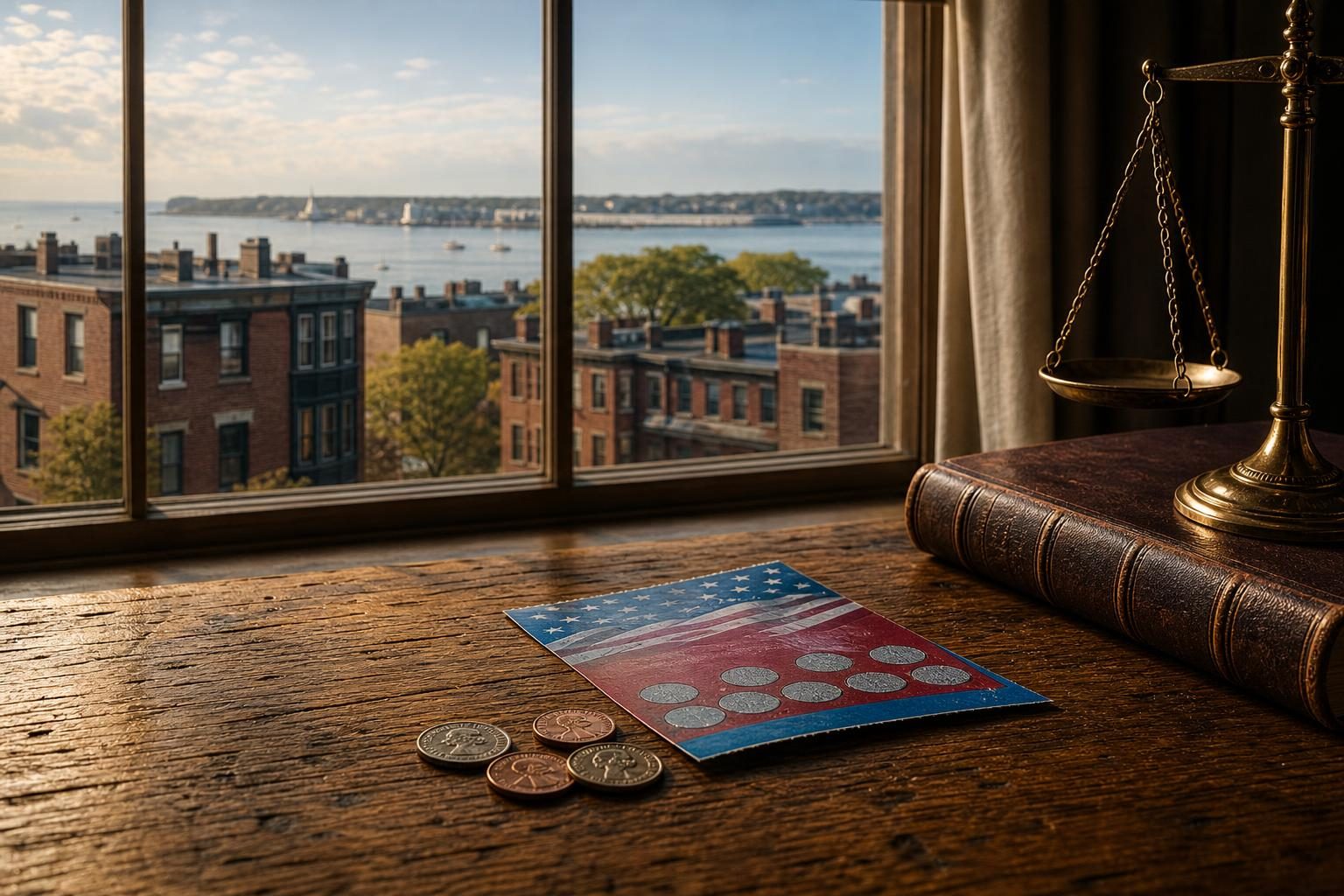
ICE says officers arrested Ariel Antonio Velasquez-Morales during operations in East Boston on Tuesday, Nov. 24 [3]. The agency says he entered the country illegally from El Salvador on May 15, 2013, and that an immigration judge ordered him removed on April 24, 2014 [3]. He will remain in ICE custody pending his removal, the agency said [3].
Earlier this month he won $1 million on a Massachusetts Lottery "$2,000,000 50X Cashword" ticket bought at a market in East Boston, and he took the one-time cash option of $650,000 before taxes, NBC Boston reported [4]. Fox News reported that the arrest followed a brief foot chase [5].
ICE has not said whether the lottery publicity led officers to him, and it declined to answer CNN's questions about what prompted the arrest or where he is being held [1]. A relative asked the public for respect and empathy for him, his wife and their children, CNN reported [1]. That request deserves to be honored. No one should cheer a family's pain, and nothing in this column does.
The Fact the Coverage Skipped Past
A sympathetic family and a lucky ticket do not change the legal fact at the center of this story. An immigration judge heard his case more than 12 years ago and ordered him removed. That is not an accusation or a profile. It is a final decision reached through the process Congress built, with a judge, a hearing and a ruling.
Federal law is direct about what is supposed to happen next. Once a person is ordered removed, the statute says the government "shall remove" him within a 90-day removal period [6]. In this case that instruction went unfulfilled for more than a decade. The arrest in East Boston is not a new punishment invented for a lottery winner. It is the government finally carrying out a judgment that was already on the books.
It also helps to be clear about what the arrest is not. It is not a raid on a lottery office or a penalty for buying a ticket. ICE's own account rests entirely on the 2013 illegal entry and the 2014 removal order [3]. Whether he gets to keep the money is a separate question, and one the reporting itself has left open [1].
The Fairness Question
Critics see something petty in arresting a man right after a stroke of good fortune. But follow that objection to its end. It implies that a removal order should be enforced only against people whose lives are going badly, or that it quietly expires once someone has stayed long enough to build a life. Neither idea appears anywhere in the law.
Consider the people the coverage rarely mentions: the immigrants who waited in line, paid the fees, filled out every form and came here the lawful way. A system that lets an ignored court order fade into permanent residence by default tells every one of them that the rules were optional. Fairness to them is not cruelty to anyone else. It is the reason the rules exist.
ICE's Boston office framed the arrest on social media as a loss for sanctuary politicians and a win for law-abiding New Englanders, a post that critics called mocking [2]. The tone was flip, and reasonable people can wish the agency had let the facts speak for themselves. The substance underneath it, though, is sound: the law applies to a lottery winner exactly the way it applies to everyone else.
What Comes Next
Velasquez-Morales still has whatever legal options remain to him, which can include asking an immigration court to reopen his case or asking a federal court to review it. Those avenues exist so that real mistakes can be corrected, and if his lawyers have a claim, they should press it. If they do not prevail, the 2014 order will be carried out.
That outcome would not be a story about bad luck. It would be a story about a court order finally meaning what it said, and about a country that expects its laws to be enforced evenly, whether the person involved is down on his luck or holding a winning ticket.
Sources
- [1]Opens in a new tab ↗
- [2]Opens in a new tab ↗
- [3]U.S. Immigration and Customs EnforcementIllegal alien lottery winner's luck runs out with ICE Boston arrestOpens in a new tab ↗
- [4]Opens in a new tab ↗
- [5]Opens in a new tab ↗
- [6]Cornell Law School LII8 U.S. Code 1231 - Detention and removal of aliens ordered removedOpens in a new tab ↗
Have you ever been censored or shadow-banned on social media?
- Yes
- I think so
- No
- I'm not on social media
More in Pushback

Fed in His Name: The Christian Charities on This Year's NFL Cleats Are Doing What Jesus Asked
Last night on From the Bench with Margaret Callahan
Training Warriors, Not Activists: The Pentagon Is Right to Bring Officer Education Home From Brown
Last night on The Vance Edge with Sienna Vance

Even Bill Maher Sees It: Late Night Stopped Talking to Half the Country
Last night on The Liberty Bell Radio Hour with Luke Harrington
Were you there?
If you were at the scene, or this story touched your life, tell us what you saw and what it was like.
Discussion 0
Sign in or create a free account to join the discussion.
No comments yet. Start the discussion.