
 This morning on American Story with Joe Redhawk
Forty Years of Full Tables: The Morongo Band Sends More Than 15,000 Turkeys Across Southern California
The tribe's 40th Thanksgiving outreach supplied 136 churches, shelters and charities, enough for more than 300,000 holiday meals.
Filed November 26, 2026 · 📍 Sacramento, CA 95814
Were you there? Share your story
Key points
- The Morongo Band of Mission Indians gave away more than 15,000 turkeys in its 40th Thanksgiving outreach.
- The turkeys went to 136 organizations, expected to provide more than 300,000 meals.
- The Coachella Valley Rescue Mission and Mecca's Galilee Center each received 300 turkeys.
- The program supplied 122 groups last year, and 12,500 turkeys was a record as recently as 2019.
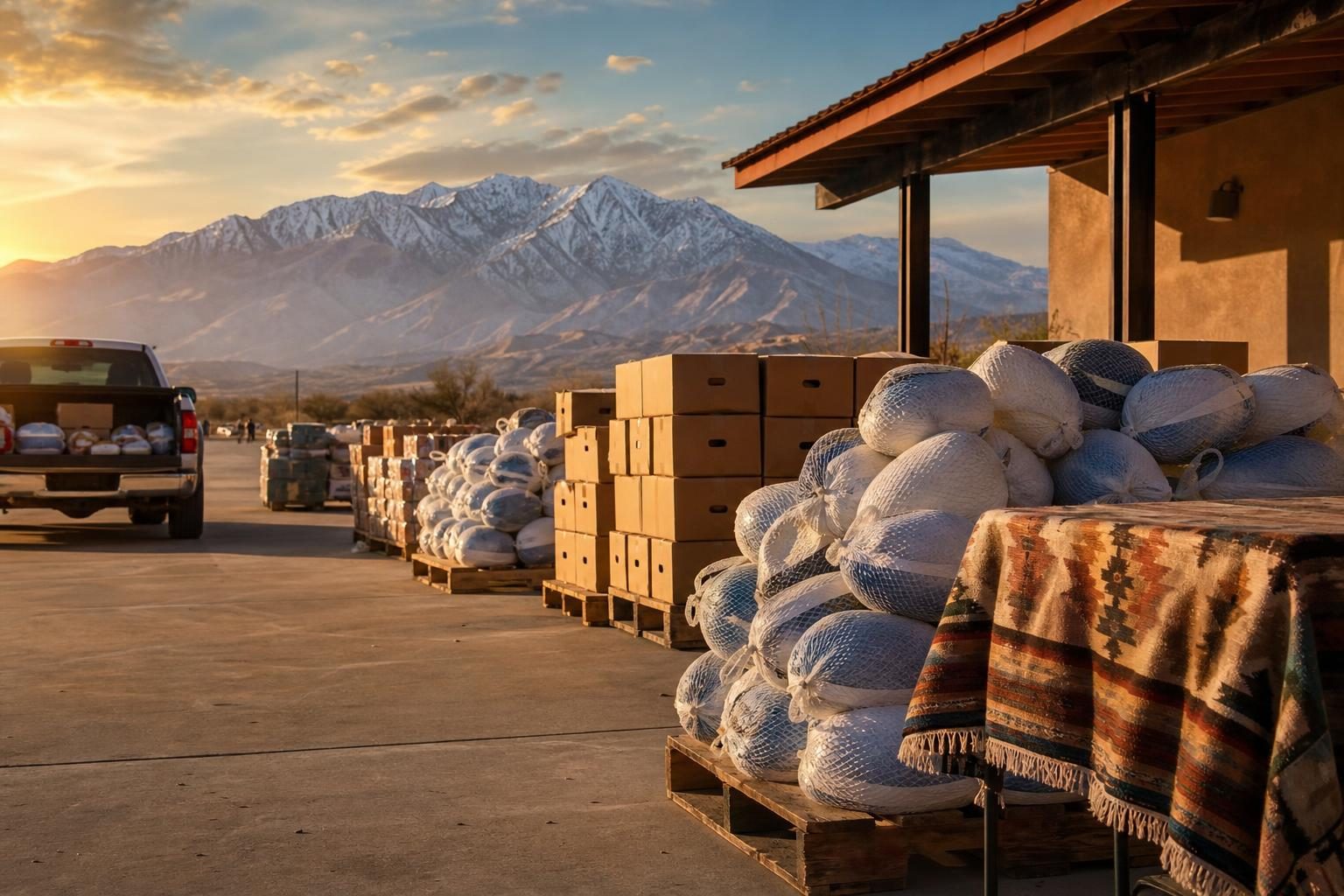
Long before most of Southern California sat down to dinner today, the work of filling tables began at the Morongo Community Center near Banning. On Nov. 16, tribal members and volunteers there started handing out more than 15,000 free turkeys, marking 40 years of the Morongo Band of Mission Indians' Thanksgiving giveaway, NBC Palm Springs reported [1].
The birds went to 136 organizations, and the tribe expects the donation to provide more than 300,000 Thanksgiving meals [1]. Native News Online, which also reported the 15,000 figure, described this year's distribution as the program's 40th annual outreach [2].
From the Pass to the Desert
The turkeys traveled well beyond the reservation in the San Gorgonio Pass. In the Coachella Valley, the Coachella Valley Rescue Mission in Indio received 300 turkeys, and the Galilee Center in Mecca received another 300, according to NBC Palm Springs [1]. Both serve families and individuals who might otherwise have gone without a holiday meal.
The scale is hard to picture. If every one of those birds were a 16-pound frozen turkey bought at this year's national average price of $23.68, as tracked by the American Farm Bureau Federation, the gift would be worth more than $350,000 at the grocery store [5]. That average price is up about 10% from last year, the Farm Bureau found, which makes a donated turkey worth more to a struggling household than it was a year ago [5].
A Tradition That Keeps Growing
The outreach has grown steadily. Last year, in its 39th year, the program supplied 122 nonprofit groups, churches and schools, NBC Palm Springs reported at the time [3]. That means this year's list grew by 14 organizations. Coverage of last year's outreach put the program's running total at almost 230,000 turkeys, enough for nearly 4.5 million holiday meals [3]. This year's 15,000 birds push that total higher still.
The yearly haul has grown, too. As recently as 2019, a donation of 12,500 turkeys was a record for the program, Indianz reported at the time [6]. Seven years later, the tribe is giving away 2,500 more birds than that record and reaching more organizations than it did just last year [1][3][6].
The giveaway is not a one-day scramble. The tribe takes applications from organizations ahead of each year's outreach, so churches, shelters, schools and food pantries can plan for the holiday rush, the Record Gazette reported in an announcement of the program's application period [4].
Why It Matters
This is the kind of story that gets lost in a news cycle crowded with conflict, so it is worth saying plainly: a sovereign tribal nation spent the days before Thanksgiving making sure tens of thousands of its neighbors, many of them strangers, had food on the table.
There is a fitting thread here. The holiday Americans celebrate today traces back to a 1621 harvest gathering where Wampanoag men and the struggling Plymouth colonists shared a meal, a moment of generosity from Native people toward newcomers who were not sure they would survive another winter. Four centuries later, the Morongo outreach carries that same spirit of open-handed welcome into food lines in Indio, Mecca and beyond.
It is also a reminder that faith communities and tribal nations often work hand in hand at the local level. Rescue missions, churches and community kitchens are the ones who turn a pallet of frozen turkeys into hot plates served to real people. The tribe supplies the turkeys, and groups like the rescue mission in Indio turn them into meals for the people they serve [1].
Food costs are higher this year, and many families feel it [5]. Generosity on this scale does not fix that, but it does what neighbors have always done for one another in lean seasons: it shows up. Forty years in, the Morongo Band is still showing up.
Sources
- [1]NBC Palm SpringsMorongo Tribe Marks 40 Years of Thanksgiving Turkey Giveaway, Donating 15,000 TurkeysOpens in a new tab ↗
- [2]Opens in a new tab ↗
- [3]NBC Palm SpringsMorongo Band of Mission Indians donates 15,000 turkeys in annual Thanksgiving outreachOpens in a new tab ↗
- [4]Opens in a new tab ↗
- [5]American Farm Bureau FederationFarm Bureau Survey Shows Thanksgiving Cost Higher in 2026Opens in a new tab ↗
- [6]Opens in a new tab ↗
Which Native success story should American Story cover more?
- Tribal businesses
- Native veterans
- Tribal colleges
- Housing and family
More in Native America

The First Bible Printed in America Spoke Wampanoag. Three Centuries Later, It Helped the Language Speak Again
Today on American Story with Joe Redhawk

From a Few Hundred to More Than 13,000: The Puyallup Tribe's Salmon Come Home in Record Numbers
Last night on American Story with Joe Redhawk
Tom Cole, Arlinda Locklear Among Six Native Trailblazers Inducted Into National Hall of Fame
On Tuesday on American Story with Joe Redhawk
Were you there?
If you were at the scene, or this story touched your life, tell us what you saw and what it was like.
Discussion 0
Sign in or create a free account to join the discussion.
No comments yet. Start the discussion.