
 On Monday on Command Post with Dan Whitaker
Trump Dares Iran to Test Hormuz Blockade as Navy Stands Ready to Stop Tanker Convoy
President Trump warned Iranian ships trying to break the U.S. blockade would end up on the seafloor, as experts doubted Tehran's reported 14-tanker convoy plan and tankers burned in Hormuz.
Filed November 23, 2026 · 📍 Washington, DC 20001
Were you there? Share your story
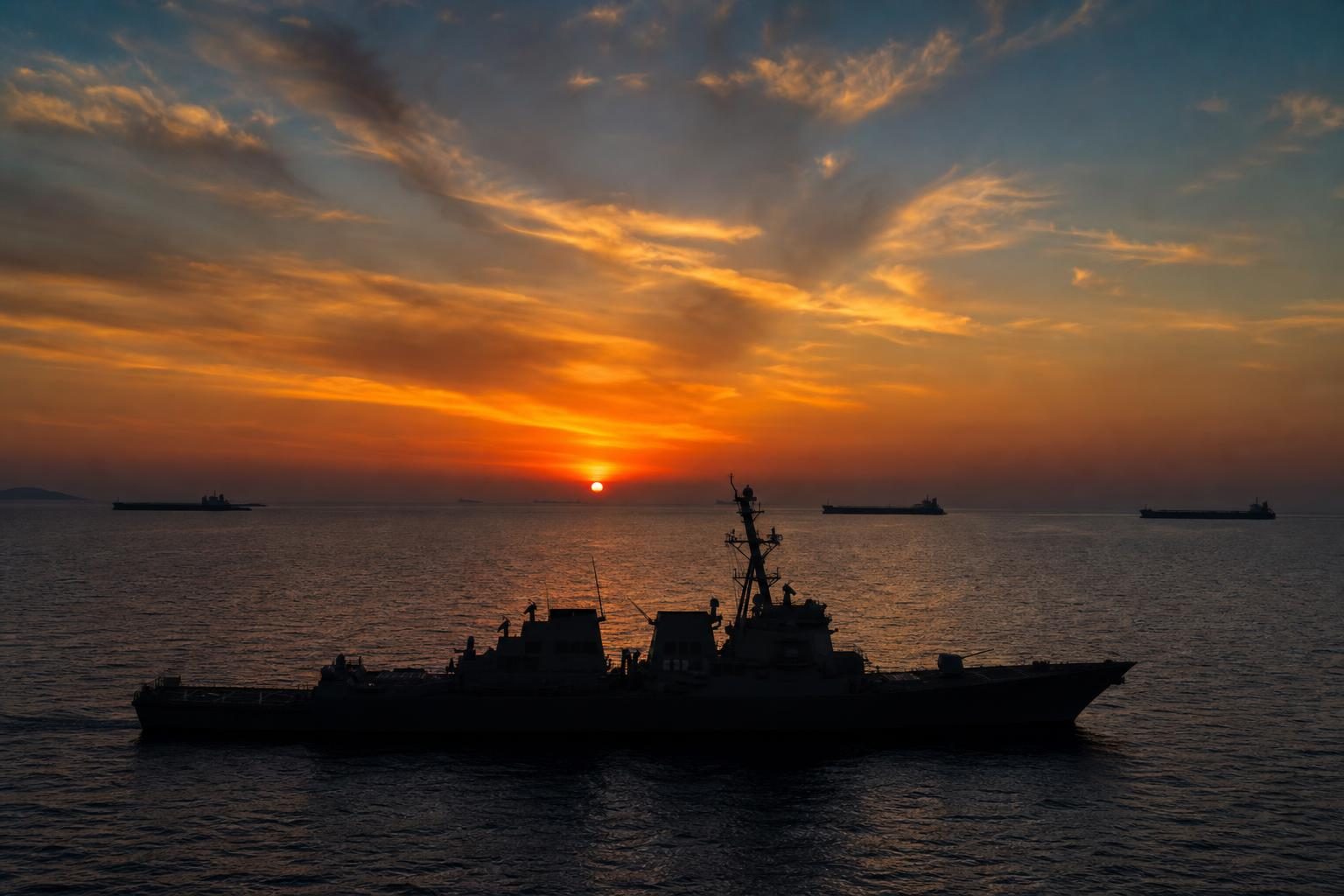
Part of our continuing coverage: Iran Masses Tankers to Test U.S. Blockade
Story tracker
- Dan Whitaker
Britain's maritime security agency has now confirmed fresh attacks on shipping in the strait. UKMTO said three vessels heading east through the Strait of Hormuz were struck by unidentified projectiles at about 20:25 GMT Monday; all three kept sailing, every crew member was accounted for, and the damage was still being assessed [1][2]. UKMTO separately reported that a bulk carrier caught fire Sunday after a projectile hit it off Dibba in the United Arab Emirates [2]. No one has claimed Monday's strikes, and it was not clear whether they involved the same ships Iran's Revolutionary Guard said had hit mines while under U.S. air escort [3].
- Follow-up storyIran Claims Mines Set 3 Tankers Ablaze, 2 Under U.S. Escort
- Dan Whitaker
Tehran answered the blockade warning on Monday. Foreign Ministry spokesman Esmaeil Baghaei called the U.S. naval blockade an act of aggression and said Iran has the right to use any available tool to defend itself, Reuters reported [1]. He said the Strait of Hormuz could reopen quickly once Washington halts hostilities, lifts the blockade and waives sanctions, and he dismissed reports of Iranian ships loading oil as speculation [1][2]. Al Jazeera also reported Iran's vow to confront the blockade [3].
Key points
- Trump dared Iran to challenge the U.S. naval blockade and signaled strikes could resume after the New Year if talks fail.
- Iran reportedly gathered 14 tankers at Kharg Island, a claim that has not been independently confirmed.
- A Fox News expert said the Navy is ready to stop any convoy, which would face both the 5th and 7th Fleets.
- Iran's navy claimed tankers defying its rules were set ablaze in Hormuz as the Houthis claimed an attack on a Saudi refinery.
President Trump on Sunday challenged Iran to try running the American naval blockade, warning that any Iranian vessels attempting to break through would end up at the "bottom of the sea," Breitbart reported [1]. The president also signaled that major U.S. strikes on Iran could resume after the New Year if negotiations fail to produce a deal [1].
The warning came after reports that Tehran had lined up 14 oil tankers at Kharg Island, its main crude export terminal, in an apparent bid to push past the blockade, according to Fox News [2]. Fox reported that the tanker count traced back to a Nov. 20 report by Hamshahri, an outlet tied to Tehran's municipal government, and that the positioning had not been independently confirmed [2].
Trump told Fox News he was quite confident that all or most of the tankers, and probably all of them, would be intercepted if they tried to sail [2]. Fox noted that the blockade on Iranian ports was first imposed in April [2].
Navy Ready, Expert Says
A maritime expert told Fox News that the Navy stands ready to stop an Iranian tanker convoy "with force if needed," and that the blockade is holding firm [3]. In Fox's written report, Charlie Brown, a senior adviser to the advocacy group United Against Nuclear Iran, brushed off the convoy talk as propaganda and said such a plan was unlikely to work even if Tehran tried it [2].
Brown explained that the Navy operates around the globe and can smoothly pass responsibility for tracking a ship of interest from one command to the next as the vessel crosses into new waters, Fox reported [2]. Any convoy leaving Kharg Island would have to cross the Indian Ocean under the watch of both the 5th and 7th Fleets, according to Fox [2].
Brown also pointed out that moving 14 tankers together is far from simple. Such an operation would require lead and trailing ships, coordinated communications and procedures for how to respond when American forces close in, he told Fox [2].
The sailors enforcing the blockade are carrying a heavy load. The Western Journal reported that roughly 7,000 service members with the USS George H.W. Bush Carrier Strike Group, which is deployed to enforce the blockade against Iran, will not be home for Thanksgiving, news that has upset their families [6]. For many military households, an empty chair at the holiday table is part of the quiet cost of keeping a hostile regime in check.
Tankers Burn as Tehran Warns of Unrest
While talk of a convoy swirled, the strait itself saw fresh violence. Al Jazeera reported that Iran's navy claimed that tankers defying its rules for passage had been set ablaze [4]. That account came from Iran's own forces.
Iran's Revolutionary Guard, meanwhile, warned that "enemies" were trying to stir up unrest inside the country, according to Al Jazeera [4]. The warning suggests the regime is nervous about pressure at home as well as at sea. Al Jazeera's live coverage also noted that oil prices fell despite the attacks on shipping in Hormuz [4].
The fighting has spread beyond the strait. CNBC reported that Yemen's Iran-aligned Houthis claimed an operation against Saudi Arabia's Rabigh oil refinery, as diplomatic efforts to end the war face long odds [5]. CNBC's report also carried Trump's warning that new strikes on Iran could come next year [5].
Pressure From Both Directions
The political pressure on the White House is coming from opposite sides. Israel's Benjamin Netanyahu urged Trump to strike Iran soon, Al Jazeera reported, citing Israel's public broadcaster [4]. At home, Democratic leader Hakeem Jeffries said that ending what he called a reckless and costly war will be a priority for the Democrat-run Congress, according to Al Jazeera [4].
The president's approach threads between those camps: keep the economic noose tight, leave the door open to a deal, and make clear that the alternative is far worse for Tehran. The blockade aims to cut off the oil revenue Tehran depends on, and the reported scramble to move tankers suggests the pressure is being felt.
For now, it remains unconfirmed whether Iran's leaders will actually order the tankers to sail [2]. If they do, the encounter would test both the Navy's reach across thousands of miles of ocean and Tehran's willingness to risk what is left of its fleet. The president has left room for talks, but he has made plain that the window may close after the New Year [1].
Americans can pray for the safety of the sailors and aviators standing watch in those waters, and for a resolution that keeps them out of harm's way while denying Iran's rulers the means to threaten the region.
Sources
Should U.S. military aid to Israel end early?
- Yes, Israel can afford its own weapons
- Phase it out slowly
- No, keep it while Iran is a threat
More in Military & Defense
Missing Sailor Found Dead as Hormuz Attacks Hit a Wartime High
This morning on Command Post with Dan Whitaker
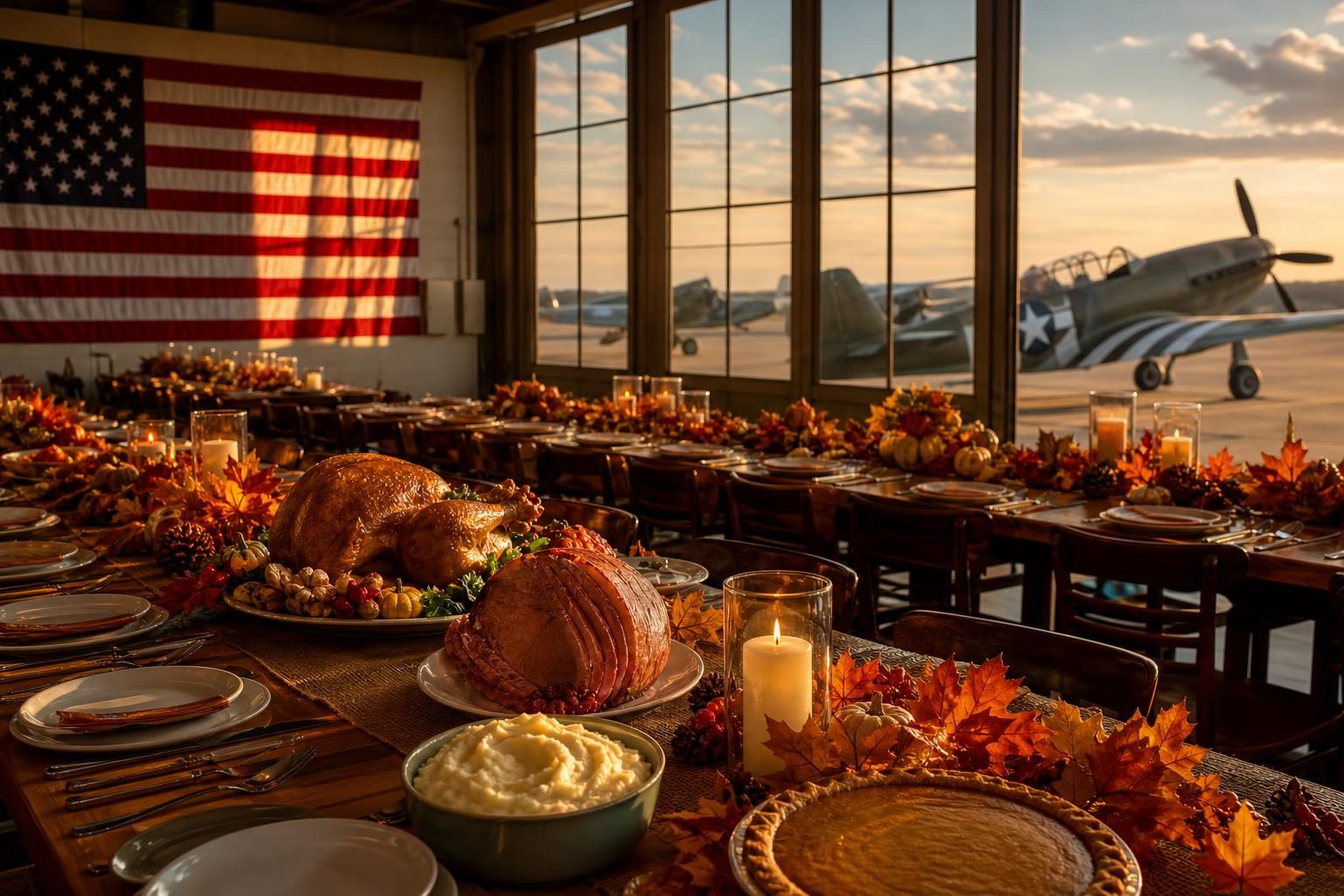
Turkey, Prime Rib and a Thank-You: The Vances Serve Thanksgiving Lunch to Airmen at Wright-Patterson
Last night on Command Post with Dan Whitaker
Middletown Stockpile Destroyed; First Air Tests Come Back Clean
Yesterday on Command Post with Dan Whitaker
Were you there?
If you were at the scene, or this story touched your life, tell us what you saw and what it was like.
Discussion 0
Sign in or create a free account to join the discussion.
No comments yet. Start the discussion.