
 This morning on Command Post with Dan Whitaker
Cyber Command Called In After Hackers Reach the Air Force's Core Cloud
Intruders used a software flaw to get inside Cloud One, the platform behind Air Force pay, personnel and logistics apps, Reuters reports. Who did it, and whether data was taken, is still unknown.
Filed November 27, 2026 · 📍 NY 12207
Were you there? Share your story
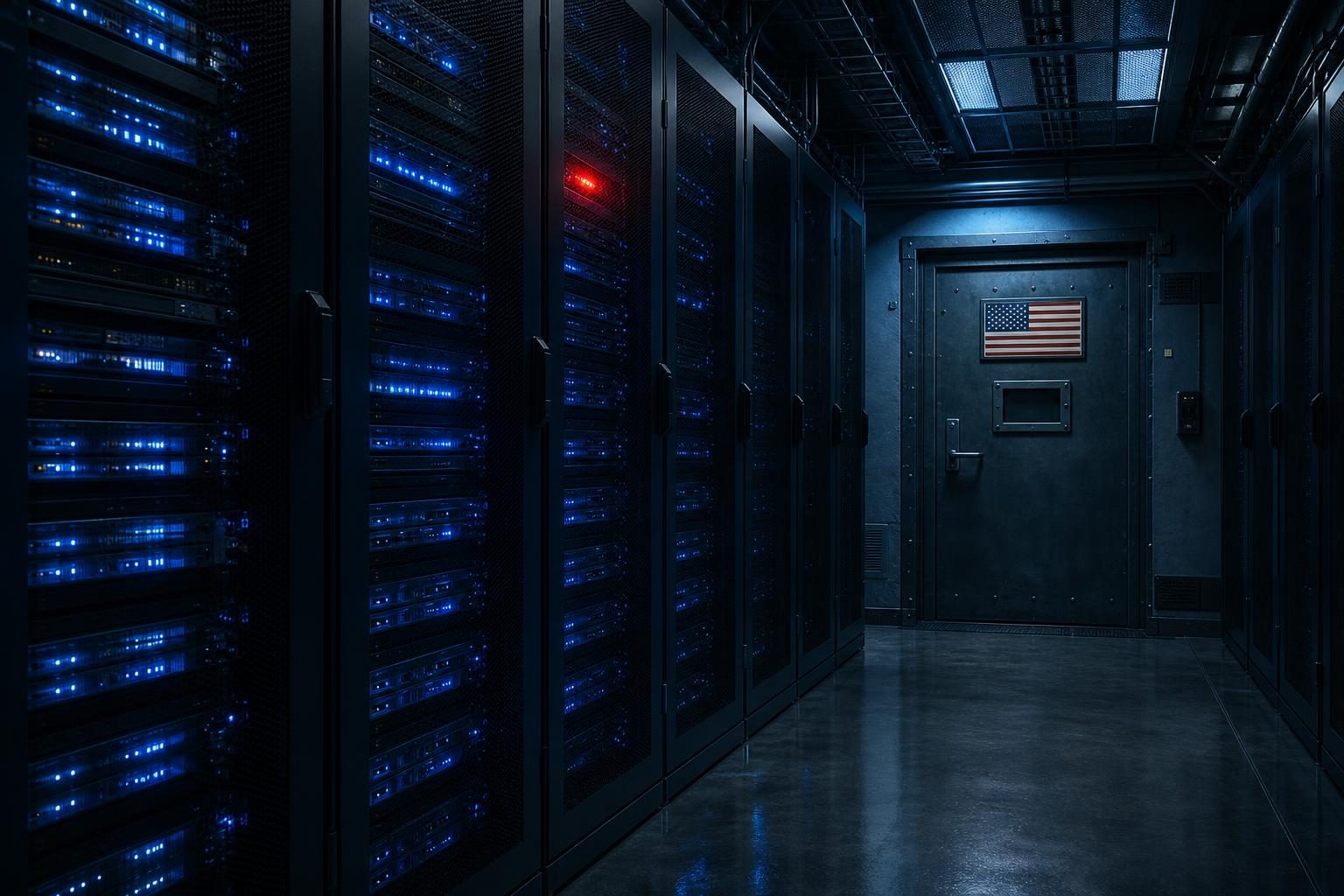
Story tracker
- Dan Whitaker
Status as of about 12:40 p.m. Eastern on Friday: There is still no on-record word from the Pentagon or U.S. Cyber Command. Confirmation so far rests on the U.S. official who spoke to NBC News, which said the break-in could have exposed sensitive military information [1]. The Washington Times reported that the intrusion came to light during an upgrade to the system, matching the first account [2], and The Daily Caller described Cloud One as one of the military's largest cloud computing systems [3].
Background: Air & Space Forces Magazine has reported that Defense Secretary Pete Hegseth earlier canceled a planned Cloud One follow-on contract, saying the move would save $1.4 billion [4]. Still unknown: who the intruders are, whether any data left the network and how long the freeze on software fixes will last. Watch for a Pentagon statement and for lawmakers to press for a briefing.
NBC News · The Washington Times · The Daily Caller · Air & Space Forces Magazine
- Dan Whitaker
Status as of about 11:30 a.m. Eastern on Friday: A U.S. official has confirmed the break-in to NBC News, which reported that it was not immediately clear when the intrusion happened or what sensitive information, if any, was exposed [1]. An Air Force spokesperson told NBC that securing critical war-fighting assets is a top priority and that the service continues to assess and modernize its enterprise cloud capabilities [1].
NBC also tied the case to the recent breach of the FBI's National Crime Information Center, reported earlier this week [1]. CNBC and The Daily Caller have now carried the Reuters account as well [2][3]. Still unknown: who the intruders are, how long they were inside and whether any data left the network. No public statement from the Pentagon or U.S. Cyber Command has appeared in the coverage so far.
- Dan Whitaker
Status as of about 10:30 a.m. Eastern on Friday: More than two hours after the first report, neither the Pentagon nor U.S. Cyber Command has said anything on the record. The Air Force's only response is still its statement that it continuously takes prudent measures to protect its information, systems and mission capabilities, Defense News reported in carrying the Reuters story [1].
The Guardian and the Washington Examiner have now picked up the report, with The Guardian noting that the break-in surfaced days after reports that a CIA database had been accessed [2][3]. NewsNation described it as the latest in a run of interference at U.S. agencies [4].
Still unknown: who the intruders are, how deep they got and whether any data was taken. What to watch: a Pentagon or Cyber Command statement, any word on stolen data, and requests from lawmakers for a briefing.
Defense News · The Guardian · Washington Examiner · NewsNation
- Dan Whitaker
Status as of about 9:30 a.m. Eastern on Friday: The Reuters report has now been carried widely, by The Hill, Newsweek and others, but no new official details have emerged [1][5]. The only on-record response is still the Air Force's statement that it does not comment on the security posture or operational status of specific networks, and no public statement from the Pentagon or U.S. Cyber Command has appeared in the coverage so far [1][2]. The Hill described the break-in as the latest in a string of cyber incidents and outages at government agencies [1].
What is at stake: defense trade reporting has described Cloud One as the home of the Theater Integrated Combat Munitions System, which tracks munitions at about 210 locations worldwide, and SAIC, the platform's former prime contractor, has said a cloud-based command-and-control tool for NORAD and U.S. Northern Command was built on it [3][4]. Still unknown: who the intruders are, whether any data was taken and how long the freeze on software fixes will last. What to watch: confirmation from the Pentagon, word from investigators on stolen data, and requests from lawmakers for a briefing.
The Hill · The Post Millennial · DefenseScoop · SAIC · Newsweek
Key points
- Reuters, citing three people familiar with the matter, reports hackers breached the Air Force's Cloud One platform.
- The intrusion was found during an upgrade within roughly the past month; updates to apps on the platform are now blocked.
- Cyber Command has been called in; the hackers' identity and whether data was stolen are unknown.
- The Air Force says it does not comment on the security of specific systems.
Hackers broke into Cloud One, the U.S. Air Force's flagship cloud computing platform, Reuters reported Friday, citing three people familiar with the matter [1]. The intrusion could put sensitive tactical, personnel and logistics data at risk, according to the report, which Bloomberg, the New York Post and Sky News quickly carried [1][2][3][4].
Reuters said it could not establish who the hackers are, how far the intrusion reached or whether any data was stolen [1].
What We Know So Far
Two of the people told Reuters the break-in was discovered within roughly the past month, during work to upgrade the system [1]. One source said the intruders exploited a software vulnerability to reach the platform's control plane, the layer that manages how the whole system runs [1]. Investigators have brought in U.S. Cyber Command, the military's own cyber force, to assess the damage, one person said [1].
The discovery has caused disruption across the platform, according to the report [1]. Updates to applications already running on Cloud One have been blocked, so Air Force personnel cannot apply fixes, just as a fresh batch of serious software vulnerabilities has been disclosed across the technology industry, Reuters reported [1]. A long-running effort to move the service's back-office applications onto Cloud One, a longstanding military priority, has been paused [1].
The Air Force told Reuters it does not comment on the security posture, vulnerabilities or operational status of specific networks and systems, and said it continuously takes prudent measures to protect its information [1].
Why It Matters to Airmen and Their Families
Cloud One was built to be a "one-stop shop" for the Air Force's computing needs, hosting applications that handle personnel records and pay as well as logistics and maintenance, Reuters reported [1]. In plain terms, the same platform touches an airman's paycheck and the parts and schedules that keep aircraft flying. The New York Post pointed to the sheer range of tactical, personnel and logistics information that could be exposed [3].
SAIC was the prime contractor for Cloud One until 2025, when Leidos took over, according to Reuters [1]. Leidos referred questions to the Air Force, and SAIC did not respond, the outlet said [1].
A Month of Federal Cyber Alarms
The report is the latest in a string of troubling disclosures about government computer systems. On Tuesday, The New York Times reported that intruders had exposed some unclassified information at the CIA and the Office of the Director of National Intelligence, and that data at other agencies was also believed to be affected [5].
Director of National Intelligence Jay Clayton said on Nov. 22 that the recent wave of technology outages hitting government and industry came from long-overdue upgrades, not coordinated or state-sponsored attacks, Reuters reported [6]. The Air Force case is different in kind: Reuters' sources describe a break-in by outside hackers, though no one has publicly said who they are [1].
What Comes Next
Three questions will decide how serious this is: who got in, whether any data left the network, and how long the freeze on fixes lasts. Watch for any confirmation from the Pentagon or Cyber Command, word from investigators on whether information was taken, and pressure from lawmakers for a briefing on how the intruders reached the heart of the system.
Sources
- [1]Reuters (via Internazionale)Exclusive-Hackers breach US Air Force flagship Cloud One computing platformOpens in a new tab ↗
- [2]Opens in a new tab ↗
- [3]New York PostHackers breach US Air Force flagship cloud computing platform — jeopardizing sensitive infoOpens in a new tab ↗
- [4]Opens in a new tab ↗
- [5]The New York TimesU.S. Spy Agencies Suffer Breach of Some Unclassified InformationOpens in a new tab ↗
- [6]Reuters (via U.S. News & World Report)US Intelligence Chief Predicts More Tech Outages as Systems Undergo UpgradesOpens in a new tab ↗
Should U.S. military aid to Israel end early?
- Yes, Israel can afford its own weapons
- Phase it out slowly
- No, keep it while Iran is a threat
More in Military & Defense

Trump Thanks the Troops on Thanksgiving, Says Victory Over Iran Is Near
Overnight on Command Post with Dan Whitaker
Up to Two Million Rounds and Javelin Missiles: Ex-Marine Admits Camp Pendleton Thefts, and the Hard Questions Begin
Last night on Deep Dive with Kevin Nakamura

Britain Checks In With 100,000 Former Troops as Russian Sabotage Fears Grow
Last night on Command Post with Dan Whitaker
Were you there?
If you were at the scene, or this story touched your life, tell us what you saw and what it was like.
Discussion 0
Sign in or create a free account to join the discussion.
No comments yet. Start the discussion.