 Yesterday on Main Street Money with Marcus Hale
United Fidelity Bank Fails in Indiana; First Citizens Takes Over Its Branches and Deposits
Regulators closed the $5.9 billion Evansville lender Friday night, the largest U.S. bank failure since 2024. Here is what customers, and the rest of us, should know.
Filed November 28, 2026 · 📍 Raleigh, NC 27601
Were you there? Share your story
Key points
- Regulators closed Evansville-based United Fidelity Bank on Friday night; First Citizens is taking over its branches and most deposits.
- With about $5.9 billion in assets, it is the largest U.S. bank failure in more than two years.
- The FDIC says customers keep their money and insurance coverage; the 22 branches reopen as First Citizens.
- The FDIC puts the cost to its bank-funded insurance fund at about $1.83 billion.
Federal regulators closed United Fidelity Bank of Evansville, Indiana, on Friday night and handed its branches and most of its deposits to First Citizens Bank & Trust of Raleigh, North Carolina, ending the run of a lender that had grown to roughly $5.9 billion in assets [2][4]. The Office of the Comptroller of the Currency, which supervised the federal savings bank, named the Federal Deposit Insurance Corporation as receiver [4].
CNN and Reuters both described it as the largest U.S. bank failure in more than two years [1][3]. American Banker counted it as the seventh bank failure of 2026 [2].
For the families and small businesses who bank there, the most important fact is the simplest one: the FDIC said customers keep their money and their deposit insurance coverage, and they can keep using their accounts [4].
What Happened Friday Night
Reuters reported that the OCC found United Fidelity was in an "unsafe or unsound condition" and likely unable to meet its obligations [3]. Those are the legal grounds a federal regulator cites when it decides a bank can no longer be allowed to operate on its own.
As of Sept. 30, the bank reported about $5.9 billion in total assets and $3.1 billion in loans, according to American Banker and the FDIC [2][4]. CNN put its deposits at about $5.4 billion at the end of September [1]. First Citizens agreed to buy substantially all of the bank's assets and to take on about $4.5 billion in deposits, leaving out certain brokered deposits and other excluded accounts, according to the reports [2][3].
The FDIC estimated the failure will cost its Deposit Insurance Fund about $1.83 billion [2][4]. The bank's holding company, Fidelity Federal Bancorp, is not part of the receivership, the agency said [4]. The last failure this large came in April 2024, when Philadelphia's Republic First Bank was closed [1][3].
What Customers Should Do
United Fidelity ran 22 branches across Indiana, Illinois, Colorado, Florida and the U.S. Virgin Islands [4]. The FDIC said those offices reopen as First Citizens branches: the ones that normally keep Saturday hours open on Saturday, and the rest on Monday [4].
The agency's advice is to keep using your current branch until First Citizens tells you it has finished moving accounts onto its own systems [4]. Customers with questions can call the FDIC at 1-866-431-1725 [4]. Federal deposit insurance covers up to $250,000 per depositor, per insured bank, for each account ownership category.
A few common-sense habits help in any bank handoff. Keep your recent statements. Read the letters First Citizens sends about checks, cards and online banking. And be wary of anyone who calls, texts or emails asking for account numbers or passwords to "protect" your money; a real bank will not ask for your password.
The Bigger Picture
There is good news inside the bad news. The system did what it was built to do: a troubled bank was closed over a weekend, a healthy buyer stepped in, and ordinary depositors were protected without an emergency act of Congress. The Deposit Insurance Fund that absorbs the $1.83 billion hit is built from premiums the banks themselves pay, not from a new taxpayer appropriation.
Still, a $1.83 billion loss does not simply vanish. The industry rebuilds that fund over time through those premiums, and bank costs have a way of reaching customers in the end, in thinner savings rates and higher fees.
That is why the questions that come next matter. This bank was under federal supervision. Savers deserve a plain accounting of what went wrong, when examiners saw it and whether anything could have been done sooner. Prudent stewardship, the old virtue of not lending or spending what you cannot cover, is not only a lesson for households around the kitchen table. It applies to banks and to the agencies that watch over them.
It is also worth keeping this in proportion. One mid-sized failure is not a banking crisis, and Friday's handoff was orderly, with branches reopening under new ownership within hours [4].
What Comes Next
Watch for First Citizens' notices to customers in the coming days, updated FDIC figures on the final cost, and any explanation from the OCC of what drove United Fidelity into trouble. For now, if you bank there, your insured money is where it was on Friday morning, under a new name on the door.
Sources
Should towns welcome AI data centers?
- Yes, they bring jobs and tax money
- Only if they pay their own power costs
- No, they strain water and the grid
More in Business & Economy
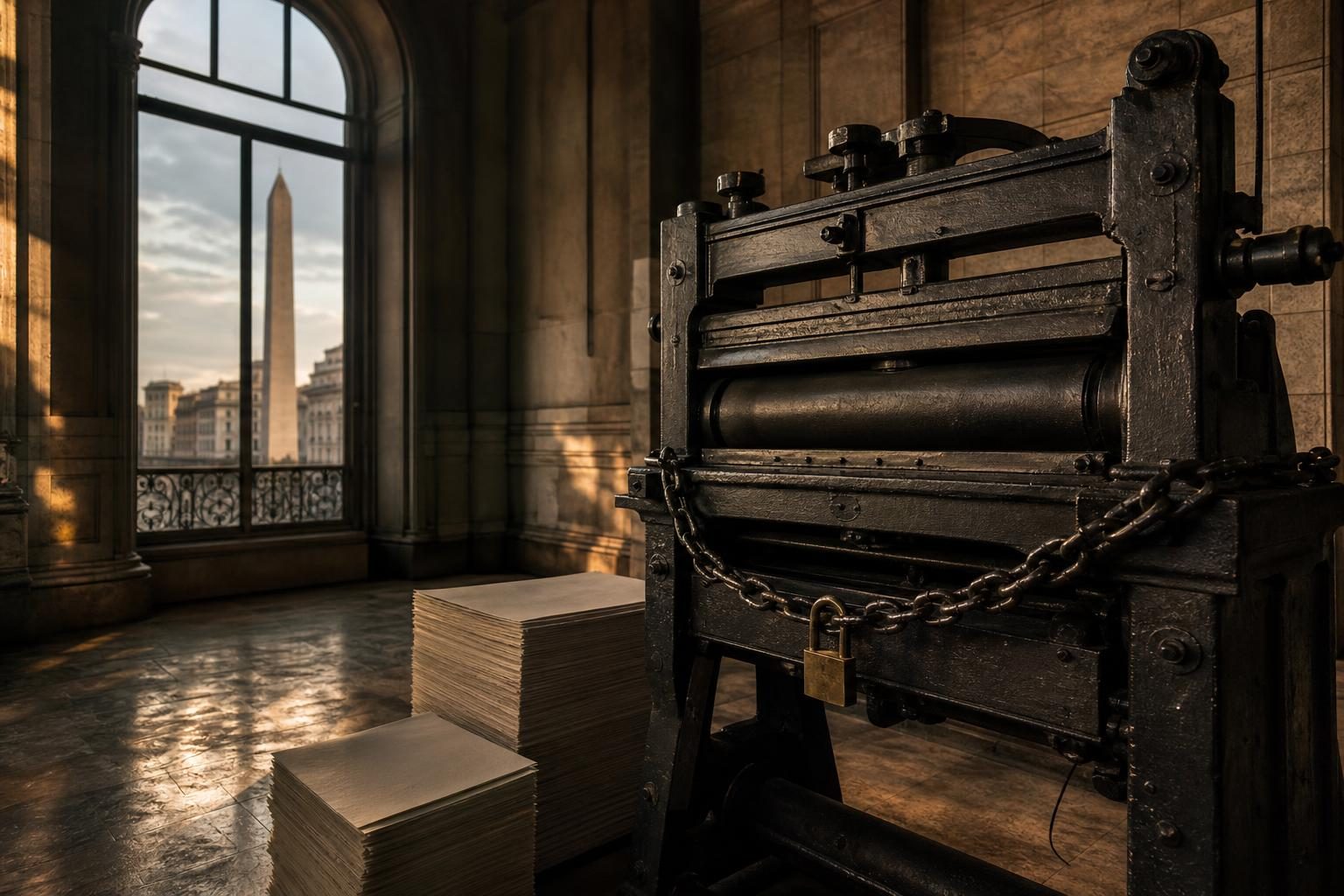
Argentina Locks Up the Printing Press: Congress Bars Its Central Bank From Bankrolling the Government
Friday night on The Hart of the Economy with Evelyn Hart

AI Gear Drives Record Imports as the Goods Trade Gap Hits $149.5 Billion
Friday night on Main Street Money with Marcus Hale
Canada First, Not the Whole Toolbox: Where Republicans Draw the Line as Democrats Take Aim at Trump's Tariffs
On Friday on Main Street Money with Marcus Hale
Were you there?
If you were at the scene, or this story touched your life, tell us what you saw and what it was like.
Discussion 0
Sign in or create a free account to join the discussion.
No comments yet. Start the discussion.